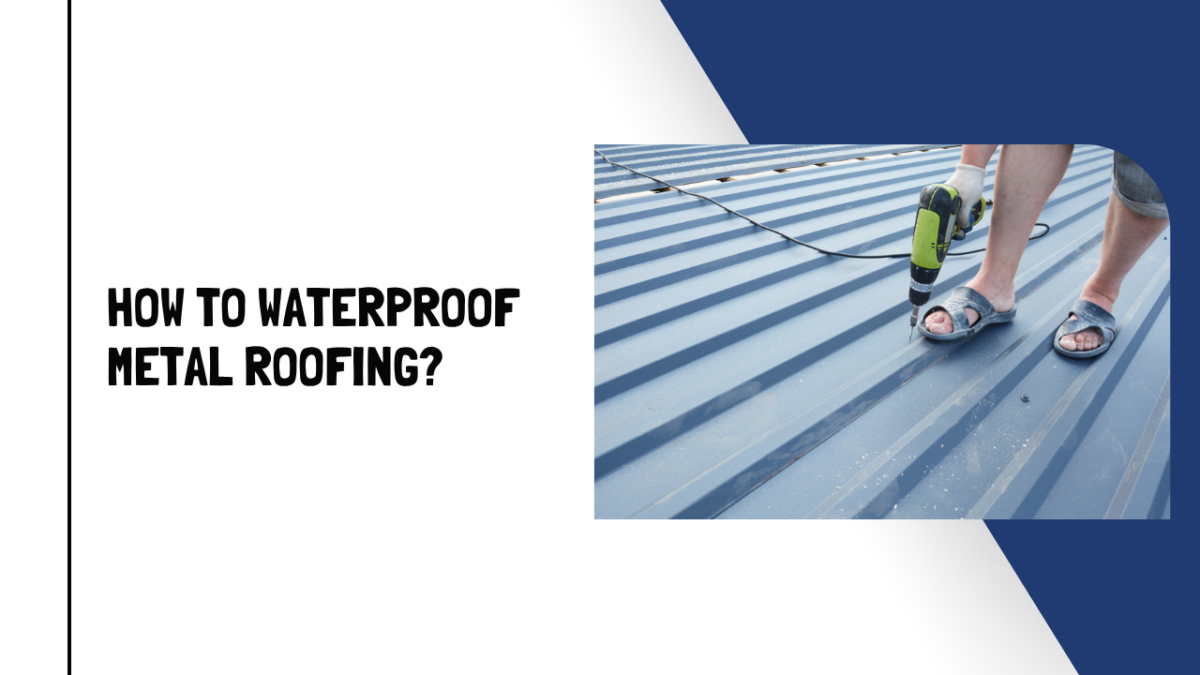
Hello guys, welcome back to my blog. A lot of you guys asked me how to waterproof metal roofing, so today I am going to answer that question in full detail. I even went and read through real discussions from roofers and homeowners to see what actually works in real life, not just theory.
If your metal roof is old, has small holes, or you just built new one and want to make sure it never leaks, then this blog on how to waterproof metal roofing is for you. I have added real quotes, a comparison table, and simple steps, so let’s get into it.
Why Metal Roofs Leak In First Place
Before I go into the steps, let me clear one thing. Metal itself is a very strong material, it does not leak on its own. Most leaks happen because of bad installation, not because the metal is bad.
According to Sheffield Metals, most leaks on metal roofs come from fastener problems, bad seams, or flashing that is missing or applied wrong. So if you ask me, before you go buy any sealant, first check these three spots, fasteners, seams, and flashing, because that is where 90% of trouble starts.
Step 1: Seal Your Fasteners And Seams Properly
This is the most important step, guys, so pay attention here. Old or loose fasteners are one of biggest reason for leaks. Over time, the rubber washer under the screw gets old and cracks, and water start going in from there.
One person on Reddit explained it very simple, “Your best bet it to replace all of the fasteners and their gaskets. While doing that place a bead of sealant at the seams and over any pine holes.” I think this is honestly the cheapest and most effective fix for an older roof.
As per RPS Metal Roofing, the sealant on fasteners usually lasts around 20 years, so if your roof is older then that, it is probably time to inspect and replace them. They also suggest checking fasteners twice a year and after any big storm.
Step 2: Pick The Right Sealant Type
Not all sealants are same, and this part confuses a lot of people. There are basically two type, tape sealants and gun-grade sealants.
According to JLC Online, butyl tape is preferred over normal caulk gun sealant because it has almost 97% solid content and does not shrink over time. Gun sealants have around 70% solid, so they shrink little bit as they dry, which can open small gaps later.
A Redditor also confirmed this from personal use, saying, “Butyl sealant. Lift the shed slightly and with a caulk gun apply underneath then set back down. It remains tacky for ~30 years and is what is used in walk in coolers and freezers to waterproof and remain waterproof for a long time.” So basically, if you want something that lasts decade after decade, butyl tape is my top pick.
My honest opinion, always ask for a sealant that is actually made for metal roofing, not just any random caulk from hardware store, because normal caulk does not handle the heat expansion and contraction of metal panels good.
Step 3: Coat The Whole Roof For Extra Protection
If your metal roof has many small holes, or it is just old and you want extra peace of mind, you can also coat the whole surface. This is more work but it covers everything at once instead of just spot fixing.
One Redditor said, “Any type of elastomeric product. Plenty of roof paints and waterproofers for roofs out there.” These are basically rubber like coatings that stretch with the metal instead of cracking.
As per Angi, a silicone roof coating usually cost around $1.50 to $2.50 per square foot, and a full roof coating system can last 10 to 20 years depending on which type you use. I think this is a good option if replacing whole roof is not in budget right now.
Step 4: Install A Proper Drip Edge
This step gets skipped a lot, but honestly it is very important. A drip edge is a small metal strip that guides water off the roof and into your gutter instead of letting it run back under the panels.
A person on Reddit explained, “There’s a product called drip edge that installs before you fasten the roof. It may be possible to slide it under and install it but you might have to temporarily bend up the metal roof, careful not to bend to far and cause a permanent bend.” So even on an existing roof, adding drip edge is possible, just need a careful hand.
For low pitch roofs, another Redditor shared a nice trick too, “with folding pliers…turn down the trays slightly to form like a drip edge into your gutter.. this is standard practice here when using rib profile roofing with a low pitch.” I really like this tip because it is such a simple fix that most people never even think about.
Step 5: Use Foam Closure Strips On Low Slope Roofs
If your roof does not have much slope, water can actually travel backward or get pushed by wind under the panels. This is where foam closure strips come in.
A roofer on Reddit made this point very clear, “I think the proper fix is foam closure strip with butyl mastic tape above and below. It’s the only way to keep water from wicking/ blowing uphill and under the sheets on a low slope roof.” So basically, foam strip plus butyl tape together is the real combo for low slope roofs.
Common Mistakes That Cause Leaks Later
Now let me tell you guys some mistakes I keep seeing people make, that can undo all your waterproofing work.
- Too many exposed fasteners on standing seam roofs. A standing seam system is built to hide fasteners, so if you see a lot of exposed screws, it is a red flag. One roofer said it plain, “Exposed fasteners on a roofing system designed around concealing fasteners.”
- Panels lapped wrong way. Panels always need to overlap in the direction water flows. A carpenter on Reddit pointed out a bad job, saying, “Nearly everything about this is wrong. The panels are lapped backwards, they are too short, there is no drip edge, and probably no neoprene closure strip under the panels at the bottom.”
- Using cutting wheel on panels. This one surprised me. Cutting wheels create hot sparks that melt the paint coating on steel, and that leads to rust later. A roofer warned about this too, saying, “Also make sure they do not use a cutting wheel to cut the panels. Hot shavings/ sparks melt the paint can will cause rusting.” My honest tip, always ask your installer to use nibblers or shears instead, never a grinder type blade.
Waterproofing Methods Comparison Table
I made this table so you guys can compare all methods at one glance without scrolling back up.
| Method | Best For | Typical Lifespan | Approx. Cost |
|---|---|---|---|
| Butyl tape on seams | Seams, laps, long term seal | 30+ years (out of UV) | Low, tape based |
| Fastener + gasket replacement | Old, leaking fasteners | 15–20 years | Low to medium |
| Silicone/elastomeric coating | Whole roof, many small holes | 10–20 years | $1.50–$2.50/sq ft |
| Drip edge install | Directing water into gutter | Lifetime of roof | Low, one time job |
| Foam closure strip + butyl mastic | Low slope roofs | Long term with butyl | Low |
Numbers above are pulled from the sources I already linked in the steps above, plus real roofer comments from Reddit.
Quick Facts Table
I always like to add a quick fact table because it is easy to scan fast.
| Fact | Detail |
|---|---|
| Main cause of leaks | Bad installation, not the metal itself |
| Best seam sealant | Butyl tape, 97% solid, does not shrink |
| Fastener sealant lifespan | Around 20 years |
| Silicone coating cost | $1.50–$2.50 per sq. ft. |
| Coating system lifespan | 10–20 years |
| Biggest cutting mistake | Using abrasive cutting wheel on panels |
Is Proper Installation The Real Key?
If you ask me, yes, this is honestly the biggest part of the whole answer to how to waterproof metal roofing. You can buy the best sealant in the world, but if fasteners are off center, seams are done wrong, or there is no drip edge, water will still find a way in.
So my honest suggestion, always hire someone who actually knows metal roofing specifically, not just a general roofer. It cost little more upfront, but it saves you from repeat leaks and repeat repair bills.
Things To Think About Before You Start
- Check your roof slope first, because low slope roofs need extra steps like foam closure strips.
- Don’t mix sealant types randomly, stick with products actually made for metal roofing.
- Inspect fasteners twice a year, especially after storms or heavy snow.
- Get proper tools, never let anyone use a cutting wheel near your painted metal panels.
- Budget for coating if roof is older, it is cheaper then full replacement.
Frequently Asked Questions
Q: What is the best way to waterproof metal roofing? A: Replacing worn fasteners and gaskets, sealing seams with butyl tape, and adding proper drip edge is the most reliable way to waterproof metal roofing.
Q: How long does metal roof waterproofing last? A: Butyl tape can last 30 plus years if it is not exposed to direct sun, while a full silicone coating system lasts around 10 to 20 years.
Q: Can I waterproof an old metal roof myself? A: Small fixes like sealing a few fasteners or applying tape on a seam can be DIY, but full roof coating or drip edge install is better left to a professional.
Q: Does coating a metal roof actually stop leaks? A: Yes, an elastomeric or silicone coating can seal small holes and cracks across whole roof, but it works best when combined with proper fastener and seam repair too.
Q: Why does my new metal roof leak even though metal is durable? A: Almost always it is an installation issue, like exposed fasteners, wrong panel lapping, or missing drip edge, not a problem with the metal itself.
Final Words
So guys, this was my full answer on how to waterproof metal roofing based on real roofer experience and some good technical sources too. I have tried to cover sealants, coatings, drip edge, and common mistakes so you have full picture before you start. My honest opinion, spend time fixing fasteners and seams first, that alone solves most leak problems. Keep on visiting Write for Us Roofing for more roofing tips like this.
Sources
- Sheffield Metals – Metal Roofing Problems
- JLC Online – Sealing and Flashing Metal Roofs
- RPS Metal Roofing – How Long Do Screws Last on a Metal Roof
- Angi – How Much Does Roof Coating Cost
- r/Renovations – Replace fasteners and gaskets comment (Reddit)
- r/DIY – Butyl sealant comment (Reddit)
- r/Renovations – Elastomeric product comment (Reddit)
- r/Homebuilding – Drip edge install comment (Reddit)
- r/Homebuilding – Turn down trays comment (Reddit)
- r/Homebuilding – Foam closure strip comment (Reddit)
- r/Roofing – Exposed fasteners comment (Reddit)
- r/Carpentry – Panel lapping comment (Reddit)
- r/Roofing – Cutting wheel comment (Reddit)