Hello guys, welcome back to my blog. So many of you guys asked me what is EPDM roofing, so today I am going to answer that in full detail. I even went and read what actual roofers are saying about EPDM roofing on Reddit, so you get the real picture, not just marketing talk.
If you have a flat roof or low-slope roof, chances are someone already told you to look into EPDM. But before you say yes to it, you should know what it really is, how it perform, and what problem it can have too. Let’s get into it.
So What Is EPDM Roofing Exactly
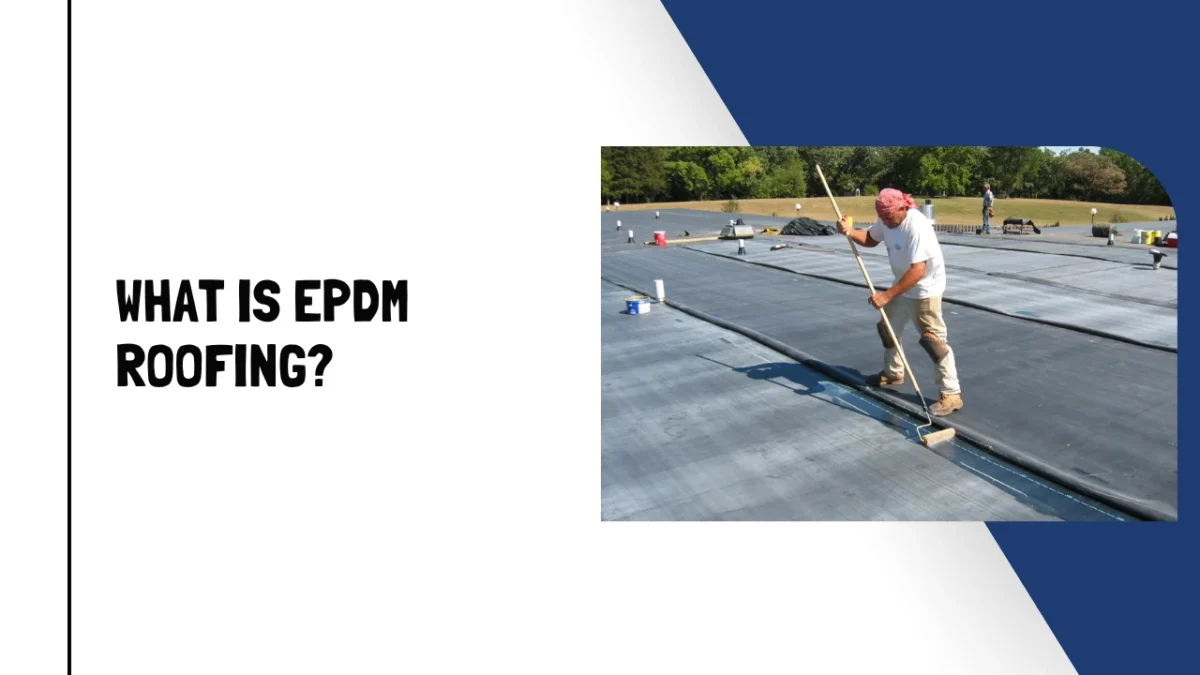
EPDM stands for Ethylene Propylene Diene Monomer. In simple words, it is a synthetic rubber membrane that comes in big rolls and gets rolled out over your flat or low-slope roof. It is basically the same rubber family used in car tires and hoses, just made into a big waterproof sheet for your roof.
As per the EPDM Roofing Association, this membrane has been used on roofs since the 1960s, and today it still make up around 15 percent of the whole commercial roofing market in North America. That is a long track record, so it is not some new experiment, it is a material that already proved itself for decades.
One thing roofers on r/Roofing also confirm is that EPDM is “a commodity item at this point,” meaning most brands are pretty much the same at the same spec. So honestly, the brand name matter less then good installation.
What Is EPDM Roofing Made Of
According to GAF, a typical EPDM membrane has three layers, an elastomeric rubber base, a fire-retardant middle layer, and a polyester-fiber reinforced top layer. This layering is what give it the flexibility and strength to survive years of sun, rain, and temperature swing without cracking too fast.
The carbon black mixed into the rubber is also why standard EPDM is black in color, and that same carbon black gives it good UV and heat resistance. Most manufacturer warranty on EPDM run around 20 years, though GAF also warns that the membrane can shrink and crack over long time when exposed to prolonged high heat, especially if it is not reinforced properly. This is why that polyester layer inside matter so much, it is not just filler, it is what stop the rubber from stretching itself apart.
How EPDM Roofing Is Actually Installed
There are three main ways an EPDM roof gets put on, and each one has its own pros and cons. As per Elevate, here is how they compare.
| Method | How It Works | Best For |
|---|---|---|
| Ballasted | Membrane laid loose, held down with stone or pavers | Roofs with structure that can hold extra weight, minimal penetrations |
| Mechanically Attached | Membrane fastened down with plates and screws | Most common on commercial buildings, good for re-roofing |
| Fully Adhered | Membrane glued down completely with adhesive | Best wind-uplift rating, works on almost any slope |
Ballasted system alone make up about 35 percent of all EPDM installs, and it is one of the fastest way to put down a roof because there is very little labor needed compare to gluing everything. But your roof structure need to handle around 10 pounds per square foot of extra ballast weight, so this option is not for every building.
Fully adhered EPDM is honestly my favorite of the three, because it gives the highest wind-uplift approval and it does not flutter or make noise in the wind like a mechanically attached membrane sometimes can.
Why Color Matters More Then You Think
Here is something a lot of you guys probably don’t know. EPDM comes in two colors, black and white, and there is a big difference between the two in real world use.
Roofers on r/Roofing are very clear about this. One comment said, “Regular EPDM is a great membrane as long as it’s not ballasted… If you want white, use TPO or PVC.” Another roofer added that white EPDM flashings and accessories tend to fail within just 10 years, way sooner then the membrane itself is suppose to last.
My honest opinion, if you like the idea of a white reflective roof, go with TPO or PVC instead. Stick to black EPDM if you are picking this material, that is where it actually performs best.
Common Problems With EPDM Roofing
I don’t like just telling you the good stuff, so let me cover the real issues roofers talk about too.
Adhesive bubbling: According to a comment on r/Roofing, if installers don’t give the bonding adhesive enough time to “flash off” before sealing the seam, gas gets trapped underneath and it creates bubbles and wrinkles in the membrane. This is a installation mistake, not really a problem with the material itself.
Seam failure over time: EPDM seams are glued or taped, not heat-welded like TPO or PVC. One roofer on r/Roofing put it simply, saying “glued seams tend to fail,” and that is exactly why some contractors in colder climate prefer welded-seam membrane instead.
EPDM Roofing vs TPO vs PVC
A lot of you guys keep asking me how EPDM compares to the other popular flat roof options, so let me break it down.
TPO is more reflective and has heat-welded seams, which many roofers prefer for durability of the seams. As one comment on r/Roofing explained, “TPO is better because welded seams wont break but adhesives will break down over the years,” and this is especially true in colder climate like Canada where ice damming is a bigger worry.
PVC is the most expensive of the three, but it handles ponding water and chemical exposure the best, and its seams are also heat-welded.
EPDM on the other hand tends to be more affordable and has a really strong long term lifespan record, especially the black version, but it does not reflect heat well and the glued seams need good installation to hold up long term.
Full Comparison Table
| Material | Average Lifespan | Cost Per Sq. Ft. (Installed) | Seam Type | Best For |
|---|---|---|---|---|
| EPDM | 15–25 years (some past 45 years) | $3.50–$10 | Glued/taped | Black roofs, budget projects, hail resistance |
| TPO | 10–15 years | $4–$10 | Heat-welded | Reflective roofs, energy savings |
| PVC | 20–30 years | $5–$12 | Heat-welded | Ponding water, chemical exposure |
Source: HomeGuide
Thickness Options You Should Know
EPDM membrane also comes in different thickness, measured in mil, same as TPO. As per JobNimbus, it is available in 45-mil, 60-mil, 75-mil, and 90-mil options, and going thicker gives better puncture resistance and hail performance, though it also add more material cost and weight.
| Thickness | Best For |
|---|---|
| 45-mil | Lighter duty, ballasted roofs, budget projects |
| 60-mil | Most common choice, good balance of cost and strength |
| 90-mil | Heavy foot traffic, extra puncture resistance |
I think 60-mil is the sweet spot for most homes. But if your roof deck get walked on a lot for maintenance work, spending extra for 90-mil can save you headache later.
Lifespan And Durability Of EPDM Roofing
This is the part most of you guys actually care about. The same JobNimbus article I mention above says the EPDM Roofing Association reports an expected service life of 38 years for a properly installed system, and some field-verified installations have actually reached 45 to 50 years of real world service.
That number honestly surprised me a bit. It also lines up with what roofers say online, since well installed black EPDM keeps coming up as one of the longest lasting flat roof options out there, way beyond what most people assume for a “rubber roof.”
One more thing worth knowing, that same source also mention that cool roofs in general can cut peak cooling demand by 11 to 27 percent in air-conditioned buildings, which is one more reason white membrane exists even though it is less reliable in EPDM form specifically.
Cost Of EPDM Roofing
As per Angi, EPDM roofing typically cost between $7.43 and $13.00 per square foot installed, with a full project averaging around $17,000 depending on the size and complexity of your roof. Materials usually make up about half of that total cost, with labor covering the rest.
That make it one of the more budget friendly options among flat roof material, especially when you compare it to PVC.
Quick Facts Table
I always like adding a quick fact table so you guys can scan this fast without reading the whole blog again.
| Fact | Detail |
|---|---|
| Full form | Ethylene Propylene Diene Monomer |
| In use since | 1960s |
| Market share | About 15% of commercial roofing |
| Seam type | Glued or taped, not welded |
| Common colors | Black (best performer), white (less reliable) |
| Common thickness | 45, 60, 75, and 90 mil |
| Expected service life | 38 years, field-verified up to 45–50 years |
| Weak point | Seam adhesion, poor performance in white |
Frequently Asked Questions
Q: What is EPDM roofing made of? A: EPDM roofing is made from a synthetic rubber compound with an elastomeric base, a fire-retardant layer, and a polyester-reinforced top layer that give it strength and flexibility.
Q: How long does EPDM roofing last? A: The EPDM Roofing Association reports an expected service life of 38 years, and some field-verified black EPDM roofs have lasted 45 to 50 years.
Q: Is EPDM roofing better then TPO? A: It depends. EPDM is usually cheaper and has a strong long term track record, but TPO has heat-welded seams and better reflectivity, so it comes down to your budget and climate.
Q: Should I choose white or black EPDM roofing? A: Roofers generally recommend black EPDM, since white EPDM and its flashings often fail within 10 years. If you want a white reflective roof, TPO or PVC is the better pick.
Q: Is EPDM roofing good for cold climates? A: EPDM can work in cold climates, but some roofers prefer welded-seam material like TPO or PVC in areas with heavy ice damming, since glued seams can break down over time.
Final Words
So guys, this was my full breakdown on what is EPDM roofing, how it is made, its lifespan, cost, and how it compare to TPO and PVC. My honest opinion, EPDM roofing is a solid, budget friendly choice if you stick to black membrane and hire a good installer who don’t rush the seams. Keep on visiting Write for Us Roofing for more roofing guides like this.
Sources
- EPDM Roofing Association – What Is EPDM
- GAF – Single-Ply Roof Membrane Types and Comparison
- Elevate – EPDM Ballasted vs. Adhered vs. Mechanically Attached
- HomeGuide – 2026 EPDM Rubber Roof Replacement Cost
- JobNimbus – EPDM Roofing Guide
- Angi – How Much Does EPDM Roofing Cost?
- r/Roofing – General EPDM discussion (Reddit)
- r/Roofing – Adhesive flash-off comment (Reddit)
- r/Roofing – Glued seams fail comment (Reddit)
- r/Roofing – TPO welded seams comment (Reddit)