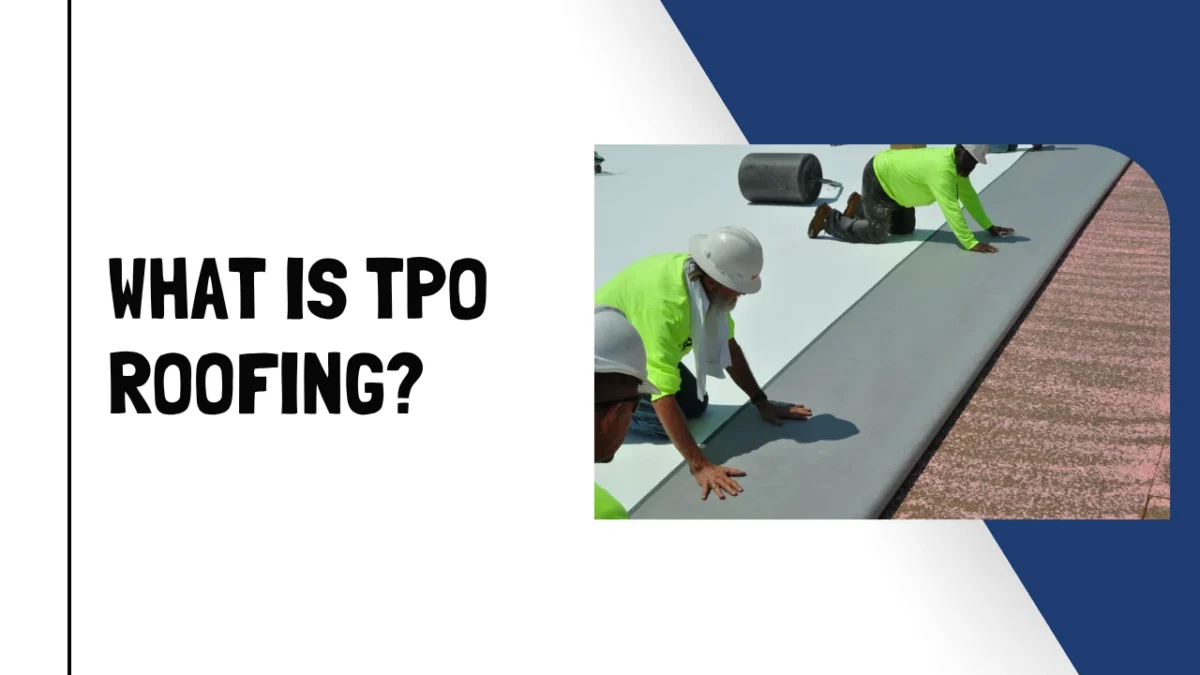
Hello guys, welcome back to my blog. So many of you guys messaged me asking what is TPO roofing, so today I am going to answer that question in full detail. I even went and read what actual roofers are saying about TPO on Reddit, so you get the real picture, not just marketing talk.
If you have a flat roof or low-slope roof on your home or business, chances are someone already told you to look into TPO. But before you say yes to it, you should know what it really is, how it perform, and what problem it can have too. Let’s get into it.
So What Is TPO Roofing Exactly
TPO stands for Thermoplastic Polyolefin. In simple words, it is a single-ply rubber-like membrane that comes in big rolls and gets rolled out over your flat or low-slope roof. It is mostly used on commercial buildings, but more and more homes with flat roof sections are using it now too.
As per GAF, TPO is “a highly engineered single-ply roofing membrane that offers excellent performance at a cost-effective price,” and honestly that line sums it up pretty well. It came from Europe first, then became big in North America in late 1990s, and according to IKO, the thermoplastic membrane market alone was worth around 4.57 billion dollar in 2021. That is a huge number for one type of roofing material, so it tells you TPO is not some small niche product.
How TPO Roofing Is Actually Installed
The seams on a TPO roof are heat-welded together, not just glued or taped. This basically melts the edges of each sheet so they become one solid, waterproof piece. A roofer on the r/Roofing community explained it simple, saying TPO is better because it’s “seamless” and a more rigid membrane compare to some other options.
As per IKO, there are actually three main ways a TPO roof gets installed:
- Mechanically attached: cheaper option, uses plates and fasteners, allows the membrane to move a bit with temperature.
- Fully adhered: glued down fully, handles wind uplift better and allows wider sheets with fewer seams.
- Induction-welded: good for big commercial jobs, saves labor time.
I think this flexibility in installation is one reason TPO become so popular, because contractor can pick the method that fit the building and budget best.
Key Characteristics Of TPO Roofing
Now let me break down the actual properties of TPO so you know what you are getting.
Color options: TPO is not just plain white. Roofers on r/Roofing mention that TPO and PVC “have a few color options,” you can get them in white, tan, and a few shades of gray. White is the most common because of the reflectivity benefit, which I will talk about below.
Reflectivity: This is actually one of TPO’s biggest selling point. As per IKO, white TPO membrane has a solar reflectance of 0.78 when new, and it still holds around 0.73 after 3 years, which is pretty good retention if you ask me. Energy Star even says a clean white roof reflecting 80 percent of sunlight can stay about 50°F cooler then a grey roof that only reflects 20 percent. That is a big difference for your energy bill in summer.
Heat resistance issue: Here is the part people don’t always tell you. TPO generally has lower heat resistance compare to some other membrane, which make it more sensitive to prolonged ponding water and high heat. One r/Roofing member put it directly, saying TPO has one of the lowest temperature thresholds in modern roofing, which make it more at risk from these conditions. My honest opinion, if your roof has drainage issue or collects water in one spot often, TPO might not be the best pick without fixing that first.
Thickness Options You Should Know
Something people don’t talk about enough is that TPO membranes actually come in different thickness, measured in mil. According to IKO, the three standard options are:
| Thickness | Best For |
|---|---|
| 45-mil | Budget projects, lighter duty roofs |
| 60-mil | Most common choice, good balance of cost and strength |
| 80-mil | Heavy duty use, more puncture and weather resistance |
I think going with 60-mil is usually the sweet spot for most homes and small commercial building, but for a roof that get a lot of foot traffic or rough weather, 80-mil is worth the extra cost.
Why Installer Experience Matters So Much
This part really stood out to me when I was reading roofer discussions online. TPO is very “installer-dependent,” meaning problems like cracking, seam failure, or the membrane aging too fast usually comes from bad welding technique or cheap material, not the TPO itself. A roofer on r/Roofing said TPO isn’t bad, but it is very installer-dependent, and I fully agree with that.
Another thing worth knowing, if TPO is mechanically fastened instead of fully adhered, it is normal for it to have a little “bubbling” when temperature go up and down. That membrane is designed to stretch a bit, so this is usually not something to panic about unless it keeps growing.
Don’t Forget The Vapor Barrier
If your TPO roof is going over a wood deck, roofers strongly suggest adding a vapor barrier underneath. As one r/Roofing comment pointed out, your roofing membrane is not supposed to also act as your air or vapor barrier. Without it, moisture can get trapped and slowly rot the wood deck under the membrane, and you won’t even notice until it’s a bigger problem. So if your contractor skip this step, ask them why.
Lifespan And Durability Of TPO Roofing
Here is the number most of you guys are actually asking me about. Average lifespan of a TPO roof is normally between 10 and 15 years, though the oldest known TPO roof out there is reported to be around 28 years old under really good, ideal condition. On the manufacturer side, GAF offers warranty up to 25 years with certified installer, and IKO says some TPO systems can carry warranties up to 30 years.
That’s a pretty big range, and if you ask me, the honest average a homeowner should plan around is 15 to 20 years with decent installation and normal maintenance, not the extreme 28 or 30 year numbers.
TPO can also be more brittle and a bit more prone to hail damage compare to other membrane like EPDM. So if you live in a hail-heavy area, this is something to seriously think about before choosing TPO.
TPO vs Other Roofing Options
I know a lot of you guys are also deciding between TPO and other flat roof material, so let me break that down too.
EPDM is a black rubber membrane that is often considered better then TPO in lifespan and hail resistance, though it is not as reflective since it usually comes in black.
PVC is more expensive but more durable and can hold standing water for long time without an issue. It also comes in more color and design option, so it looks nicer too.
Modified bitumen is a cheaper option and comes in colors that match regular shingles better, but it has more seams and can age poorly if water keeps sitting on it.
Full Comparison Table
| Material | Average Lifespan | Cost Per Sq. Ft. (Installed) | Best For |
|---|---|---|---|
| TPO | 10–15 years (up to 25–30 yr warranty) | $4–$10 | Reflective flat roofs, budget-friendly |
| EPDM | 15–25 years | $3.50–$10 | Hail-prone areas, low maintenance |
| PVC | 20–30 years | $5–$12 | Roofs with ponding water, longevity |
| Modified Bitumen | 10–20 years | $4–$8 | Matching shingle look, tight budget |
Source: HomeGuide
Quick Facts Table
I always like adding a quick fact table so you guys can scan this fast without reading the whole blog again.
| Fact | Detail |
|---|---|
| Full form | Thermoplastic Polyolefin |
| Seam type | Heat-welded, not glued |
| Average lifespan | 10–15 years (up to 30 yr with premium systems) |
| Common colors | White, tan, gray |
| Common thickness | 45, 60, and 80 mil |
| Solar reflectance (white, new) | 0.78, drops to about 0.73 after 3 years |
| Best suited for | Flat and low-slope roofs |
| Weak point | Heat resistance and ponding water |
Cost Of TPO Roofing
According to HomeGuide, TPO material alone costs around $1.00 to $2.50 per sq ft, but once you add installation it comes to about $4 to $10 per sq ft. For a average size roof, total project cost usually falls between $7,700 and $14,000. It is not the cheapest option out there, but I think it gives good value because of the energy saving from reflectivity and lower material cost compare to PVC.
Frequently Asked Questions
Q: What is TPO roofing made of? A: TPO roofing is made from thermoplastic polyolefin, a rubber-like single-ply membrane that gets heat-welded at the seams to create one solid waterproof layer.
Q: How long does TPO roofing last? A: Most TPO roofs last between 10 and 15 years, though premium systems with certified installation can carry warranties up to 25–30 years.
Q: Is TPO roofing good for residential homes? A: Yes, TPO roofing works well for flat or low-slope sections of a home, and its reflectivity can help lower cooling cost in summer.
Q: What is the biggest downside of TPO roofing? A: The biggest downside is its lower heat resistance and higher risk from ponding water and hail, so drainage and installer quality matter a lot.
Q: Is TPO better then EPDM? A: Not always. EPDM usually last longer and handle hail better, but TPO is more reflective and can help more with energy cost, so it depends what you need.
Final Words
So guys, this was my full breakdown on what is TPO roofing, how it is made, its lifespan, cost, and how it compare to other material like EPDM and PVC. My honest opinion, TPO is a solid choice if you get a good installer and your roof does not have bad drainage issue. Keep on visiting Write for Us Roofing for more roofing guides like this.